The Best Interior Styles for Virtual Staging: Which One Sells Faster in 2026?

Stageless Team
Virtual staging gives agents something that physical staging never could: the ability to furnish the same property in five completely different styles and test which one resonates most with buyers. In practice, most agents choose a style once and apply it consistently, often based on personal preference rather than evidence.
This article looks at what the evidence actually says — about which styles perform best on portals, which styles match which property types, and how to make the decision in a way that maximises your listing's engagement and reduces time on market.
Why the staging style matters more than agents realise
The staging style is not a cosmetic decision. It is a targeting decision.
Every interior aesthetic appeals primarily to a specific buyer demographic. A Minimalist room appeals to buyers who value clean, uncluttered living — typically younger professionals, people downsizing from larger homes, and buyers who find visual complexity stressful. A Luxury staging appeals to buyers in the premium segment who associate high-end materials with status and quality. An Industrial style appeals to urban buyers attracted to loft culture and the aesthetic vocabulary of converted commercial spaces.
When a staging style is mismatched to the likely buyer for a property, two things happen. First, the listing underperforms in portal click-through rate, because the hero photograph does not speak to the right audience. Second, buyers who do visit find a disconnect between the staged photographs and their own aspirations for the space, which reduces the emotional pull of the viewing.
Getting the style right is not about personal aesthetics. It is about understanding who your buyer is and what their aspirational version of the property looks like.
The five styles and who they are for
Modern
The Modern style uses clean lines, neutral palettes, and contemporary furniture with an emphasis on quality materials. Think low-profile sofas in warm greys and taupes, glass and steel coffee tables, architectural floor lamps, and large-format abstract wall art. Kitchens and bathrooms in Modern staging feature handleless cabinetry, stone or quartz surfaces, and integrated appliances.
Modern staging appeals to the broadest demographic of any style. It works for buyers across age groups and income levels, avoids any strong cultural associations, and presents as aspirational without being intimidating. It is the most frequently used staging style for exactly this reason — it rarely alienates anyone and often appeals to everyone.
Best suited for: new-build apartments, city centre properties, recently renovated homes, and any property where the seller is uncertain about the buyer profile.
Minimalist
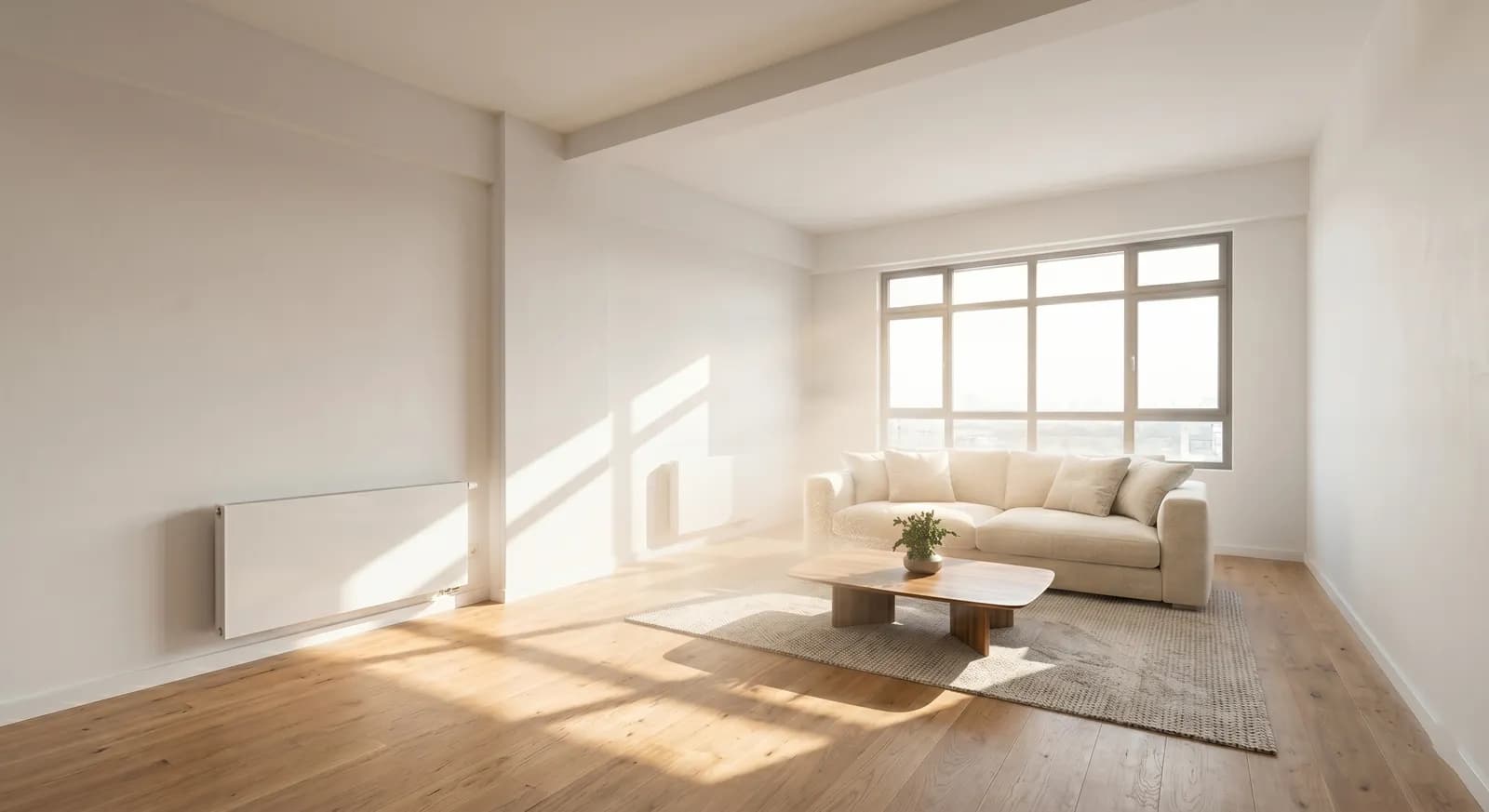
Minimalist staging takes the principles of Modern staging and strips them further. Less furniture, more space, lighter colours, simpler forms. A Minimalist bedroom might feature only a bed, two bedside tables, and a single pendant light — with the emphasis entirely on the quality of the natural light and the proportions of the room.
The Minimalist style is particularly effective for smaller spaces, because the reduction of visual elements makes rooms feel larger and more serene. It is also the style most likely to appeal to buyers who find staging itself off-putting — buyers who feel that heavily styled spaces make it harder to imagine their own belongings in the room.
One important caveat: Minimalist staging requires high-quality underlying photography to work well. The style offers nowhere to hide if the room has unflattering proportions, poor light, or an uninspiring view. For properties with strong architectural bones and good natural light, it is exceptionally effective.
Best suited for: studio and one-bedroom apartments, properties with excellent natural light, Scandinavian-influenced architecture, and buyers in the 25–40 age bracket in urban markets.
Scandinavian
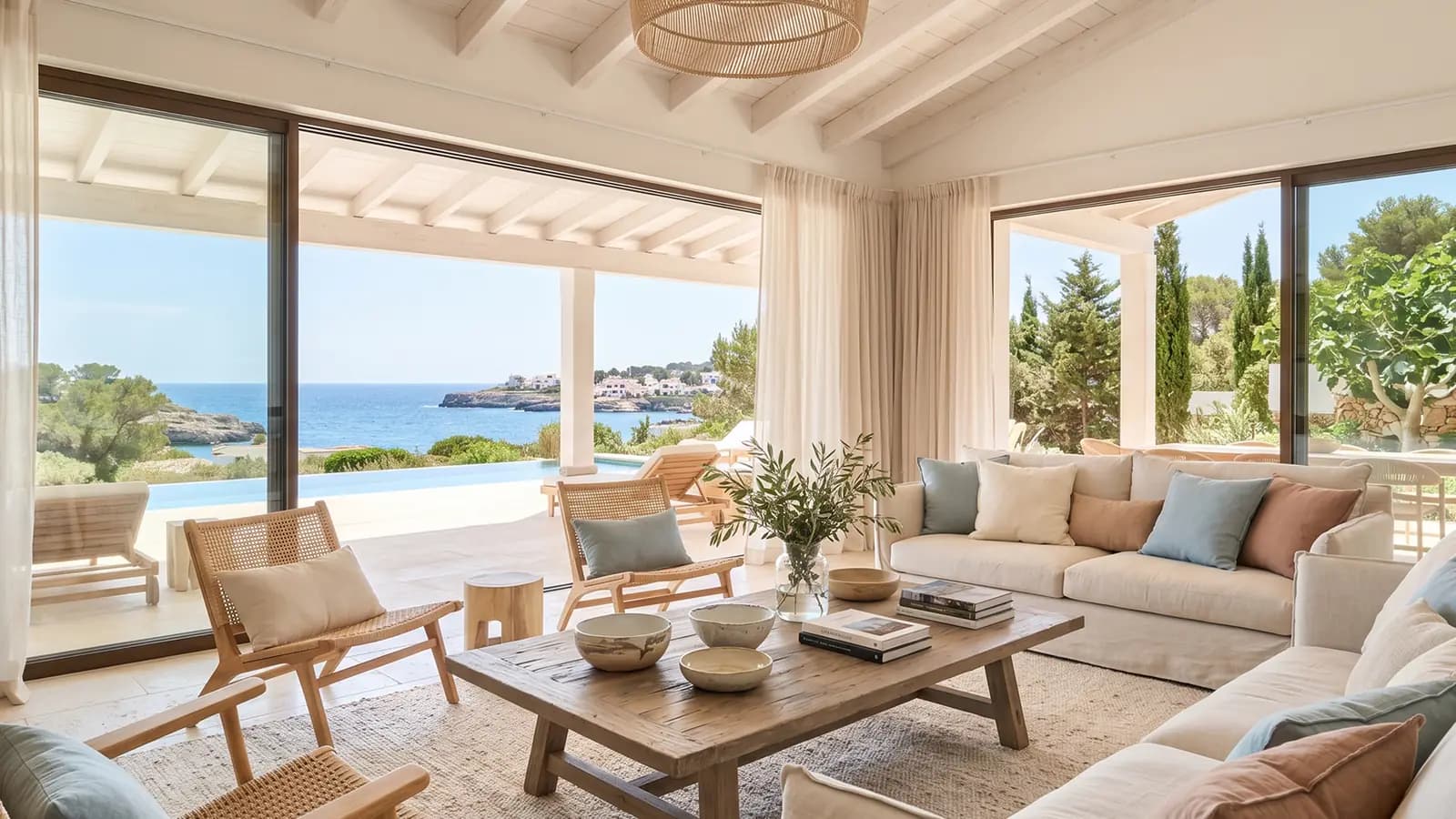
Scandinavian staging shares elements with both Modern and Minimalist but adds warmth through the use of natural materials, soft textures, and a cosy atmosphere. Light oak furniture, linen textiles, wool throws, ceramic accessories, and an abundance of plants are the defining elements. The colour palette runs from white and cream through warm grey to dusty sage.
The Scandinavian style consistently performs strongly on portals because it photographs extremely well. The combination of warm natural materials, soft textiles, and plants creates images that feel inviting and liveable — buyers can see themselves in the space immediately. It also has broad cross-cultural appeal, having been widely adopted as an aspirational aesthetic across European and North American markets.
For properties where the goal is to generate emotional engagement and maximise time-on-page metrics on portals, Scandinavian is frequently the strongest performer. Research from Rightmove and Zillow on listing engagement consistently shows that warm, light-filled photographs with natural materials generate higher save rates than cooler, more clinical presentations.
Best suited for: family homes, properties in suburban or semi-rural locations, properties targeting buyers with children, and any property where warmth and liveability are the primary selling message.
Industrial
Industrial staging draws on the aesthetic of converted factories and warehouses — exposed brick, raw concrete, weathered timber, metal accents, leather furniture, and Edison bulb lighting. It is a highly specific style that works exceptionally well in the right context and poorly in the wrong one.
The power of Industrial staging is that it does something no other style can: it turns the architectural raw material of a conversion property into a feature rather than something to be disguised. A polished concrete floor, exposed steel beams, or original brick walls are the backdrop against which Industrial furniture is designed to be seen. Without the staging, these elements read as unfinished. With it, they read as intentional and desirable.
The risk of Industrial staging is applying it to properties where the architecture does not support it. A Victorian terraced house, a modern apartment block, or a suburban family home staged in Industrial style creates a jarring mismatch that buyers notice immediately.
Best suited for: loft conversions, former industrial buildings, properties with exposed brick or concrete, urban apartments with high ceilings, and buyers in the 28–45 age bracket in metropolitan markets.
Luxury
Luxury staging uses premium materials, rich colours, and statement furniture to present a property as the highest possible expression of its type. Velvet upholstery, marble surfaces, brass and gold metalwork, heavy curtains in deep tones, and oversized artwork are the defining elements. Every piece of furniture is chosen to signal quality and sophistication.
Luxury staging is not simply expensive-looking Modern staging. It has a distinct vocabulary — heavier, more opulent, more maximalist — that speaks directly to buyers in the premium segment. For buyers who measure value by the quality of materials and the visual weight of a space, Luxury staging creates an immediate association between the property and aspiration.
The critical consideration with Luxury staging is that it sets an expectation. Buyers who respond to Luxury photographs will arrive at a viewing with a high benchmark in mind. If the property's actual finishes do not match the staging's implied quality level, the viewing creates disappointment rather than excitement. Luxury staging should be reserved for properties where the physical quality of the space genuinely supports it.
Best suited for: high-value apartments and houses, penthouses, properties with premium finishes, and markets where the buyer demographic is primarily affluent professionals or investors.
How to choose the right style for your listing
The decision framework is simple in principle and requires judgment in practice.
Start with the property's architecture. The building itself gives strong signals about which styles are appropriate. A raw loft conversion almost always benefits from Industrial staging. A Victorian terraced house with high ceilings and period details responds best to Luxury or Scandinavian staging. A new-build apartment in a city centre development is typically best served by Modern or Minimalist.
Then consider the buyer profile. Who is most likely to buy this property, given its location, size, price point, and condition? If the answer is young professionals in an urban market, Modern or Minimalist will typically outperform. If the answer is families relocating to a suburban area, Scandinavian will outperform. If the answer is high-net-worth investors or luxury buyers, Luxury is the appropriate choice.
Finally, consider what the competition is doing. If every comparable listing in your area is staged in Modern style, a Scandinavian or Luxury presentation creates differentiation that makes your listing memorable. In a crowded portal results page, a distinctive visual presentation is itself a competitive advantage.
Should you test multiple styles?
One of the practical advantages of AI virtual staging over physical staging is the ability to generate multiple versions of the same room at minimal cost. At €0.60 per image, generating the same living room in Modern, Scandinavian, and Luxury styles costs under €2.
Some agents use this to test portal performance: launch with one style, monitor click-through rate over the first week, and switch to an alternative if engagement is lower than expected. This approach is more common in markets with active portal analytics tools, but the principle is sound wherever you have access to listing performance data.
The more common application is to stage different rooms in complementary styles — for example, staging the living room and kitchen in Modern style while staging the bedrooms in Scandinavian to create a warm and restful contrast. This mixed approach is particularly effective when the property appeals to buyers who value contemporary living spaces but prioritise comfort in sleeping areas.
The one mistake that undermines every staging style
The most common staging error is not choosing the wrong style. It is choosing a style that is inconsistent with the property's architectural character.
A high-end Luxury staging applied to a mid-range property creates a mismatch that buyers register immediately, even if they cannot articulate exactly why the listing feels off. The staging promises something the property cannot deliver, which generates viewing disappointment and reduces the likelihood of an offer.
The reverse is equally true: understaging a genuinely premium property — presenting a high-ceilinged penthouse in a basic Modern style when Luxury staging would have captured its full potential — leaves value on the table.
The staging style should feel like the property dressed at its best, not like a different property entirely.
Generate all five staging styles and choose the one that performs best — 20 free credits at stageless.ai/en/auth/register
Written by Stageless Team
We are a team of real estate technology experts passionate about AI. Our mission is to help agents sell faster by democratizing access to high-end virtual staging tools.