Virtual Renovation: Show the Reform, Not a Fantasy

Stageless Team
Editor in Chief
In the first quarter of 2026, existing homes in Portugal rose 19.7% year on year. New build rose 12.6%. Transactions fell 8.7%. Buyers are moving into older stock because there is not much else available.
The property that needs work stopped being the difficult listing in your portfolio. For most agents, it is now the portfolio.
And the buyer looking at it is not short on imagination. They are short on a number. They can see the kitchen is from 1994. What they cannot see is whether replacing it costs eight thousand euros or twenty-five, and that uncertainty is what stops them, not the kitchen.
This is how to use virtual renovation so it answers that question instead of avoiding it: publish the original beside it, attach a cost range under it, and never edit out anything the buyer will find at the viewing.
The Market That Made This the Default Listing
Portugal: existing stock is appreciating faster than new build
The INE house price index rose 17.8% year on year in the first quarter of 2026, the highest increase in the European Union. Eurostat put the EU average at 5.1% for the same period, with Bulgaria at 14.8% and Slovakia at 14.4% behind Portugal, and Spain at 12.8%.
Inside the Portuguese figure there is a split that changes the sales conversation. Existing dwellings rose 19.7%. New build rose 12.6%. At the same time 37,745 homes were transacted, 8.7% fewer than in the same quarter of 2025.
Fewer sales, higher prices, and the older stock climbing faster than the new. That is the shape of a market where buyers are being pushed into properties that need work because the alternative does not exist at a price they can reach.
Spain: the stock is old and the reform market is substantial
In Spain the pattern is structural rather than cyclical. More than half of the housing stock is over 40 years old, and in Catalonia the proportion exceeds 65%.
The reform market that follows from that is large and growing slowly. Andimac counted 1.9 million housing interventions in 2025, up 1.6% on 2024, with roughly three in ten households carrying out some kind of improvement during the year.
On intentions, a study by Recomiend.app and Reeno, based on 384 responses collected between November and December 2025, found 84% of Spanish consumers intending to renovate and 59.25% planning to do so during 2026, with an average declared budget of 8,362 euros. Bathrooms accounted for 40.8% of that demand and kitchens for 31.2%. The sample is small and it is worth saying so, but it is the figure that exists, and the concentration in two rooms is consistent with what agents report.
The counterweight most articles leave out
Renovation costs in Spain have risen somewhere between 30% and 40% in recent years.
That matters because it removes the premise most agents still use when they present a property needing work. The property "for reform" is no longer the bargain it was. A buyer looking at it is not buying a discount, they are buying an uncertain budget, and the uncertainty is doing the damage.
Which is the whole argument for what follows. If the barrier is a number, the presentation has to include a number.
Virtual Renovation Is Not Virtual Staging
These two get used interchangeably and they should not be. The distinction has consequences for how you present the images and for what you have to disclose.
What each one changes
Virtual staging adds what moves. Furniture, rugs, lamps, art, cushions. Everything it adds is something that leaves when the seller leaves.
Virtual renovation changes what stays. Floor coverings, wall finishes, architectural elements, kitchen units, bathroom fittings. On Stageless AI these are separate tools that can be combined on the same image, alongside staging, object removal and lighting enhancement, and materials can also be replaced through plain-language instruction editing.
Why the disclosure differs
The test that decides your disclosure is simple: can the buyer have this by moving in?
Furniture, yes. They bring their own. A label saying "virtually staged" and a line in the description are enough.
A new floor, no. They have to pay for it. That means the disclosure has to say more than that the image was edited. It has to make clear that the image is a projection of work not yet done, and that the property is sold in its current condition. Wording that works: "Renovation concept. Property sold in its current condition."
Article 50 of the EU AI Act has applied since 2 August 2026, and the disclosure duty sits with whoever publishes the listing. For a renovation image the case for labelling is stronger than for staging, not weaker, because more of what the buyer is looking at does not currently exist.
Always Publish the Original Beside It
This is the rule that separates a useful renovation image from a misleading one, and it is the rule almost nobody follows.
The common mistake is to publish only the "after." A flawless kitchen, no context, sitting in a gallery next to photographs of the property as it actually is. The buyer scrolling that gallery cannot tell which of the two versions they will walk into. That doubt stops them harder than the old kitchen ever did, because now they also doubt the listing.
The pair solves it. Original on the left, renovated version on the right, same frame, same crop, so the comparison is direct rather than implied. It does two things at once. It shows the buyer exactly what work is involved, which is information they need. And it removes any question about whether the listing was presented honestly, which protects you.
Same frame matters more than it sounds. A wide original next to a tighter renovated shot reads as a trick even when it is not, because the eye registers that something changed beyond the finishes.
Attach a Cost Range, Not a Promise
The renovated image answers "what could this look like." It does not answer "what does that cost," and that is the question actually blocking the decision.
So put a range under the pair. Not a figure, a range, and one drawn from your own market rather than a national average. A bathroom in Seville is not a bathroom in Barcelona, and a flat with sound wiring is not a flat that needs the electrics redone.
Where to get the range: two or three quotes from contractors you already work with, for the kind of intervention the image depicts, refreshed once or twice a year. That is a morning of work and it is reusable across every listing in the same segment.
State clearly that the figure is indicative and that structural work, damp and electrical installations need a survey. You are giving the buyer an order of magnitude so they can decide whether to view. You are not producing an estimate, and you should say so.
One thing not to do: generate a cost figure from software. No image model can tell from a photograph whether a wall is load-bearing or whether the wiring needs replacing. A number that arrives with your name on it and collapses under a builder's quote costs you the deal and the relationship, which is a worse outcome than having no number at all.
The Rooms Worth Renovating Virtually, in Order
Kitchen
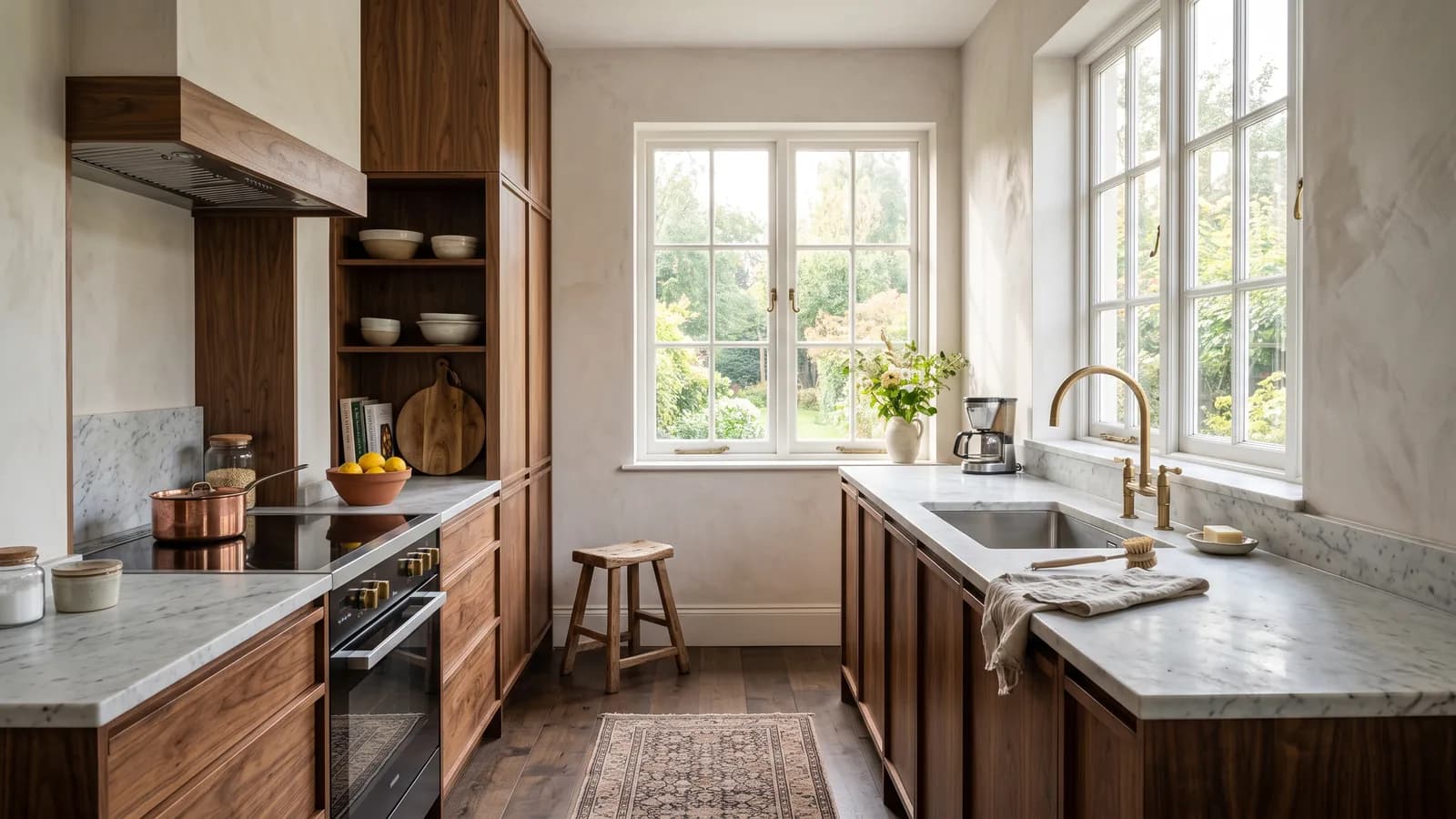
First, always. It is the room that dates a property fastest and the one buyers price hardest. In the Spanish study above, kitchens accounted for 31.2% of renovation demand.
Change the units, the worktop and the floor. Leave the window and the layout exactly where they are, because moving plumbing is the single largest variable in a real kitchen budget and implying it is cheap is the fastest way to lose credibility at the viewing.
Bathroom
Second, and in the Spanish data the largest single category at 40.8%. A dated bathroom reads to a buyer as an unavoidable immediate cost, which makes it a direct deduction from what they will offer.
Tiles, sanitary ware, lighting. Same rule on the plumbing positions.
Living room
Third. Usually the floor and the wall finish, and often that is enough, because a living room dates through its surfaces rather than through its fixtures.
This is also the room where renovation and staging combine most naturally: renovate the floor, then stage the furniture on top of the new surface.
What is rarely worth it
Bedrooms, corridors and utility rooms. A buyer does not make a decision on the finish of a corridor, and the credits are better spent on a second variant of the kitchen.
Which raises the more useful version of the question. Two options for the kitchen, showing a modest refresh and a full replacement, tell a buyer more than one option each in six rooms. It also converts the conversation from "is this worth it" into "which of these two," which is a better conversation to be having.
What You Must Never Renovate Away
The line is not blurry and it is not a matter of taste.
Cracks. Damp patches and water staining. Exposed or visibly unsafe wiring. Structural damage. Anything that would need a licence or a structural intervention to change.
The test again: can the buyer change this after they buy? Dated tiles, yes, by paying for tiles. Subsidence, no. A crack that runs across a load-bearing wall is not a finish, it is a condition, and removing it from the photograph is misrepresentation regardless of what the disclosure says.
This also applies to anything outside the property that the buyer cannot alter. A pylon in front of the window, a neighbouring wall, a blocked view. None of those are renovation subjects.
In the UK, misleading property marketing is a criminal offence under the Consumer Protection from Unfair Trading Regulations 2008, enforced by National Trading Standards. In Spain, the Direccion General de Consumo has described AI retouching in property advertising as unfair competition, while noting there is no sector-specific prohibition. The absence of a specific rule is not the absence of exposure.
The Exterior Is a Separate Decision
Interior renovation serves the photographs a buyer sees after opening the listing. The exterior serves the cover photo that decides whether they open it at all.
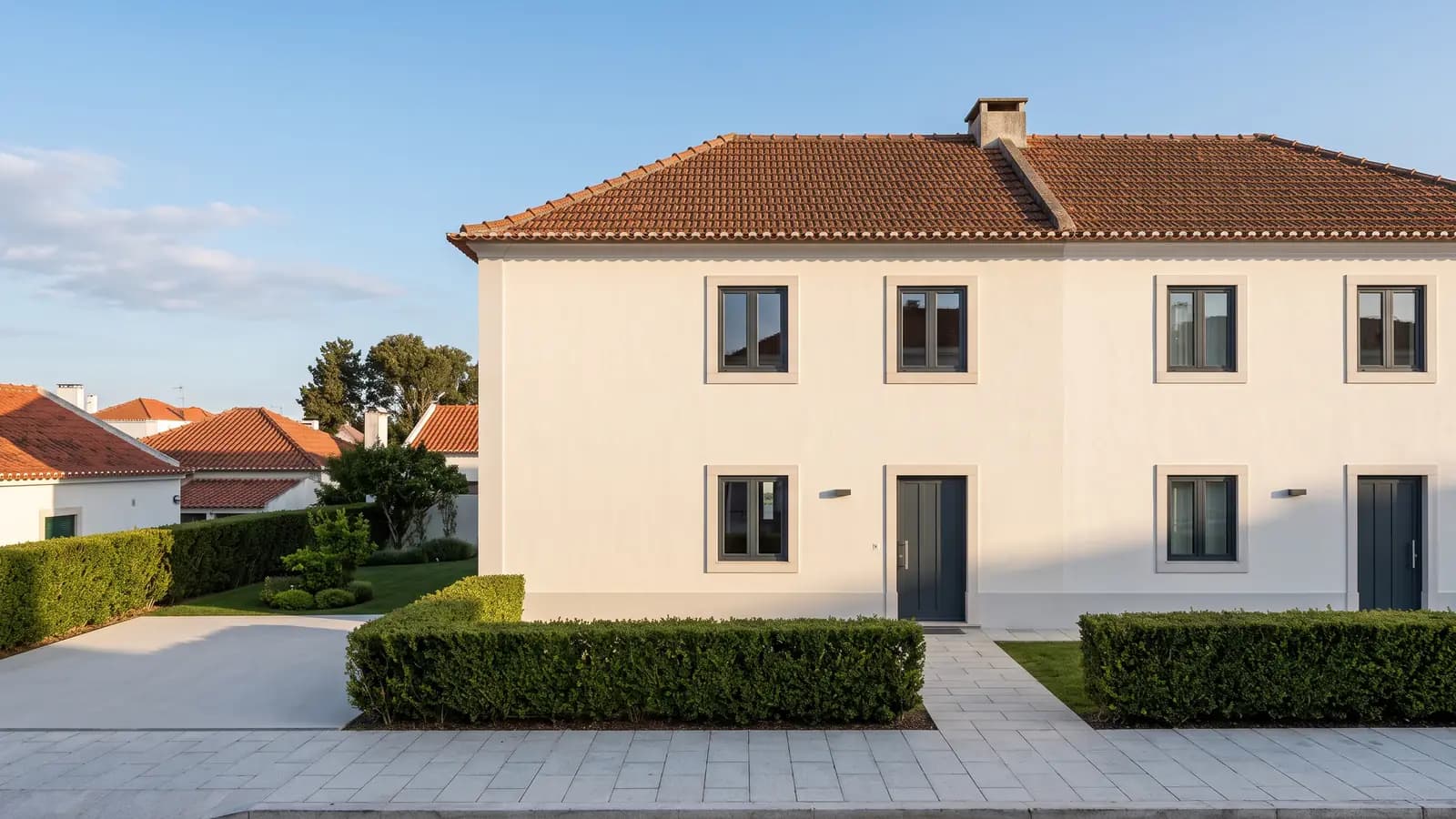
Facade renovation, garden and landscaping refresh, object removal from the driveway, sky replacement. On a property needing work, the facade often carries the same dated signal as the kitchen, and it is doing that work in the one image that appears in search results.
Same rules apply. Publish the original, disclose the edit, and do not remove anything structural or anything outside the property boundary.
For Developers: Selling a Rehabilitation Project
A developer marketing a building before or during rehabilitation has a harder version of the same problem. The finished apartment does not exist, and the buyer is asked to commit to something they cannot inspect.
Virtual renovation from photographs of the current state has one advantage over a CGI render, and it is a specific one. The render starts from a drawing, so a buyer knows every part of it is an invention. The renovation image starts from a photograph of the actual building, so the walls, the window positions and the proportions are real, and only the finishes are projected. Buyers read the two differently, and the second carries more weight.
Two obligations that are not optional here. The disclosure has to state explicitly that the images represent a design concept and that the property is sold in its current condition. And the projected finishes have to match what will actually be installed, because a buyer who signs on a marble worktop and receives laminate has a claim, and it is a claim the marketing created.
The same set of images also supports a video tour, which for an off-plan or mid-rehabilitation property is where the spatial argument gets made. Stage or renovate the photographs first, then generate the walkthrough from the finished set, because the order is not reversible.
The Workflow
Photograph the property as it is, including the rooms you intend to renovate, in consistent light and at consistent camera height.
Declutter and remove objects first if the property is occupied, so the renovation applies to a clean surface rather than negotiating with what was there.
Correct exposure and colour before applying finishes, because a correction applied afterwards also lands on the projected surfaces.
Apply the renovation tools to the kitchen, bathroom and living room. Combine with staging where the room needs furniture as well as finishes. Under a minute per image, 4K output.
Use instruction editing for variants rather than regenerating, so the second finish option keeps everything else identical. That identical framing is what makes a two-option comparison readable.
Build the pair for each room: original and renovated, same crop, cost range underneath.
Write the disclosure before you publish, not after.
What the Staging Studies Actually Say
Since this article uses market data, it is worth being clear about the data it does not use.
The figures that circulate about staging and renovation imagery shortening time on market come almost entirely from two American sources: the National Association of Realtors and the Real Estate Staging Association. The often-quoted claims about selling substantially faster do not come with published sampling methodology.
No European study with a published sample exists on the effect of virtual renovation imagery on time to sell or on final price. Anyone quoting a European percentage is extrapolating from American association material.
The mechanism is plausible and the market data above is solid. The percentage is not verified, and we would rather say so than repeat a number we cannot source.
Getting Started
Stageless AI runs in a browser, from 0.60 euros per image on pay-as-you-go, with monthly plans from 20 to 99 euros. Three free credits on signup, no credit card required.
A sensible first attempt: take the listing in your portfolio that has been on the market longest and needs work. Renovate the kitchen photograph. Publish the pair, original and renovated, with a cost range from a contractor you trust. Then watch whether the enquiries change.
Try it free at stageless.ai. Three credits, no subscription, no credit card.
Written by Stageless Team
We are a team of real estate technology experts passionate about AI. Our mission is to help agents sell faster by democratizing access to high-end virtual staging tools.