How Virtual Staging Impacts Leads on Real Estate Portals (2026 Data)

Stageless Team
Editor in Chief

How Virtual Staging Impacts Leads on Real Estate Portals
In 2026, the modern real estate funnel begins long before a buyer ever calls an agent. It begins on the screen — specifically, on the cover image of a listing scrolling past on Zillow, Rightmove, Idealista, or Imovirtual. Buyers swipe through dozens of properties in a single browsing session, and each individual listing has roughly two seconds to earn a click. That decision — to click or to scroll — is almost entirely visual.
This is why AI virtual staging has become one of the most measurable lead-generation tools available to real estate professionals today. Unlike vague brand-building tactics, the impact of better listing photos can be tracked directly in click-through rate (CTR), saved-listing counts, and contact-form submissions.
Why Listing Photos Drive the Entire Lead Funnel
Every major property portal uses an internal ranking algorithm that prioritizes listings buyers actually engage with. According to the National Association of Realtors (NAR), 87% of home buyers found photos to be the most useful feature in their online property search. On portals like Zillow, the cover photo accounts for the majority of CTR variance between two listings at the same price point in the same neighborhood.
The mechanism is straightforward: a listing with a polished, aspirational photo earns more clicks; more clicks signal the algorithm to show that listing higher in search results; higher placement compounds into more leads. A weak cover photo causes the opposite — fewer clicks, lower placement, and a steady decline into invisibility.
The Hidden Cost of an Empty Room
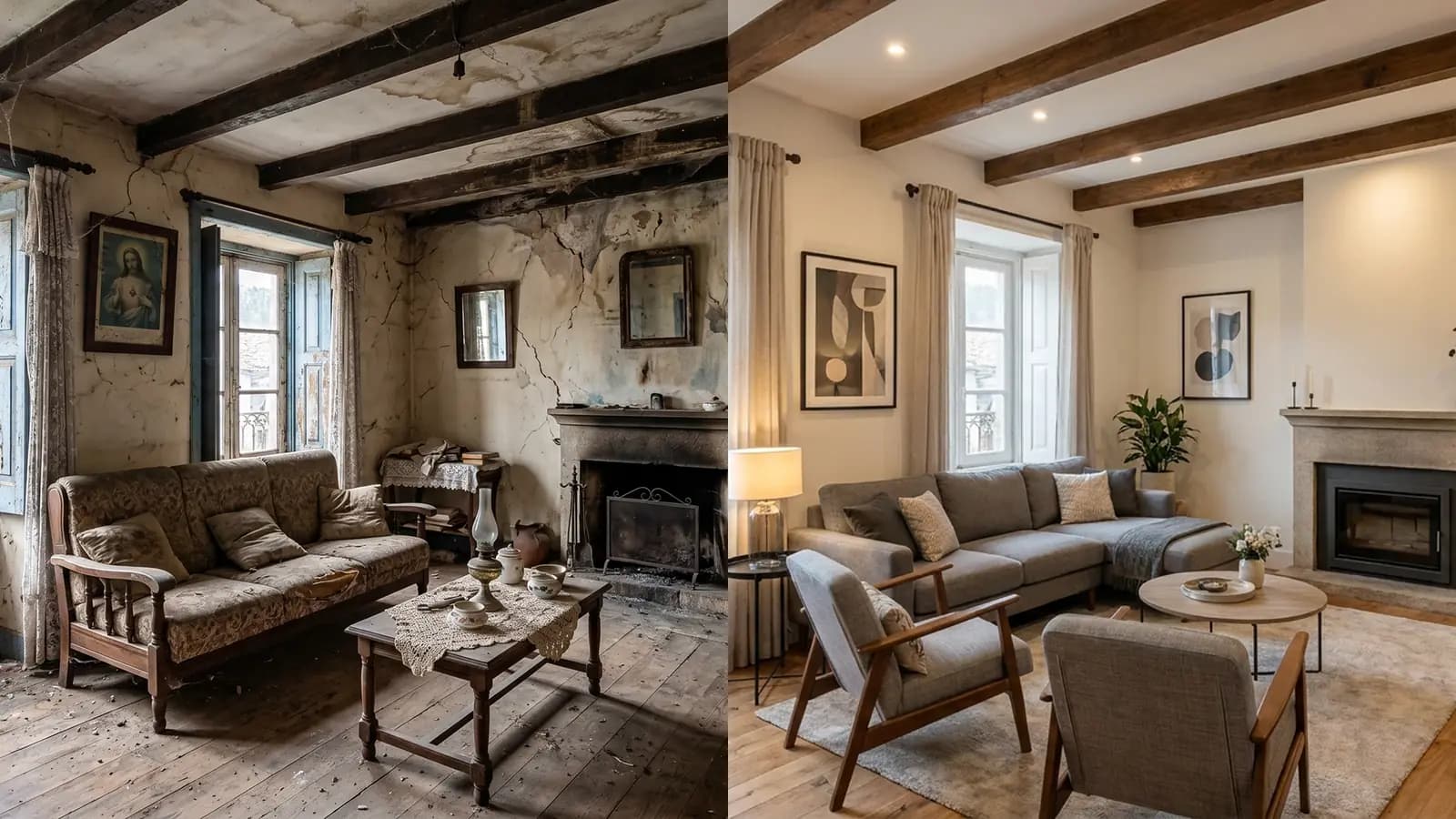
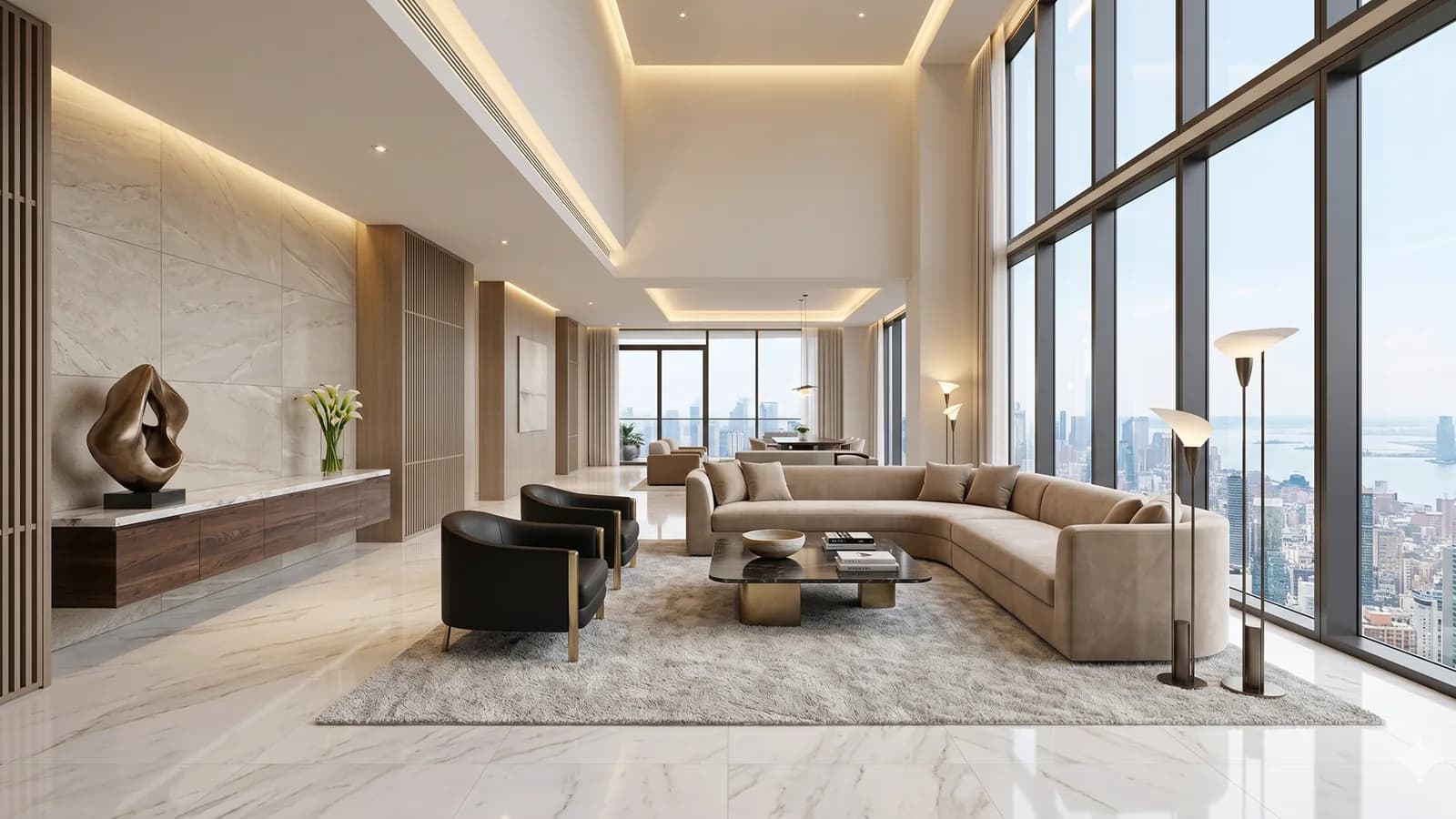
Vacant rooms photograph small. Without scale references like furniture, buyers often perceive a 25 m² living room as feeling closer to 15 m². This perception bias is well-documented in environmental psychology: the brain estimates space by counting visual cues, and empty rooms have almost none. A potential buyer scrolling on a phone screen has no way to mentally furnish the space — so they scroll past. Virtual staging solves this by giving the brain the cues it needs in under a second.
The Hidden Cost of a Cluttered Room
The opposite problem is just as damaging. Tenant-occupied or owner-occupied homes often display personal items, mismatched furniture, and visual chaos that distracts buyers from the architecture itself. A cluttered photo doesn't sell the property — it sells the seller's lifestyle, which is rarely what the buyer is shopping for. Our AI declutter tool solves this by digitally removing clutter without anyone moving a physical object.
The Measurable CTR Boost from AI Virtual Staging
When agents replace a vacant or cluttered cover photo with a professionally staged AI render, the impact on listing performance is consistent across markets. Industry benchmarks from agencies that have adopted virtual staging tools report:
- Up to 40% increase in click-through rate on the cover photo within the first week of replacement.
- 3x more direct contact-form leads in the first 10 days of the listing being live.
- Average days-on-market reduced by 30-50%, particularly for empty new-build apartments and tenant-occupied homes.
- Higher saved-listing counts, which feed directly into portal algorithm visibility on platforms like Zillow.
These numbers compound. A staged listing not only earns more clicks today — it gets shown more tomorrow, because the portal interprets the engagement as a signal that buyers want to see it. This is the same flywheel logic that drives organic visibility on YouTube or TikTok, applied to real estate listings.
Portal-Specific Considerations for 2026
Zillow and Trulia (US Market)
On Zillow, the hero shot is rendered at high resolution on both desktop and mobile. The platform's "Zestimate" panel competes for attention, so a flat, washed-out photo loses immediately. Listings with crisp, well-lit, staged photos consistently dominate the "Recommended for you" carousel. Pair AI staging with our auto image enhancement tool to ensure every photo has corrected white balance, contrast, and exposure before it goes live.
Rightmove and Zoopla (UK Market)
UK portals weight "saved listings" and "instant-tour" engagement heavily. A staged hero photo that suggests a clear lifestyle (family, professional couple, retiree downsizer) helps buyers self-identify with the property in the first second. Buyers who can imagine themselves in the space are dramatically more likely to schedule a viewing.
Idealista and Imovirtual (Iberian Market)
In Portugal and Spain, where many listings are tenant-occupied during the sale process, decluttering matters even more. Buyers in these markets are visibly turned off by photos showing landlord clutter or aging furniture from the previous tenant. Combining our AI object removal tool with virtual staging effectively rescues listings that would otherwise sit unsold for months.
Funda, ImmoScout24, and SeLoger (European Markets)
European portals tend to have stricter expectations around photo authenticity — virtually staged photos must be clearly labeled as such in many jurisdictions. Stageless AI's architectural integrity feature ensures that the structural elements of the room (windows, walls, floors) are preserved exactly, which keeps your listings compliant while still benefiting from the lead boost.
How AI Staging Improves Lead Quality, Not Just Quantity
One of the most underappreciated benefits of virtual staging is that it filters leads. A buyer who clicks a beautifully staged photo of a 2-bedroom apartment is signaling clear intent — they like the style, they like the layout, and they want to see more. The contact-form submissions that follow tend to be higher-quality and convert at a measurably higher rate than leads from unstaged listings.
Conversely, an empty-room listing often gets clicks from buyers who are simply curious about price-per-square-meter or comparing market data. These visits don't convert. By staging upfront, agents pre-qualify their pipeline before a single email is exchanged.
Time-on-Listing as a Quality Signal
Most portals also track how long a visitor stays on a listing page. Staged photos invite scrolling — buyers want to see the kitchen, the bedroom, the bathroom in full context. This longer dwell time is a strong algorithmic signal that the listing is high-quality, which then pushes it higher in subsequent searches by other buyers, creating a virtuous cycle of engagement and visibility.
A Practical Workflow for Agents in 2026
The following workflow takes a vacant or cluttered property from raw photo to portal-ready in under five minutes per image:
- Photograph the property as-is. No need to declutter physically or rent furniture.
- Upload to Stageless AI. Drag and drop directly into the dashboard.
- Run the AI declutter tool on cluttered rooms to clear visual noise.
- Apply virtual staging using one of our pre-defined design styles (Modern, Scandinavian, Industrial, Coastal).
- Use the AI text-to-edit feature for last-mile tweaks (e.g., "remove the painting on the back wall" or "add a vase on the dining table").
- Run auto image enhancement to lock in optimal lighting and color before export.
- Upload to your portal of choice with the correct compliance label if required.
The full pipeline costs €0.60 per photo. For a 12-photo listing, that's €7.20 total — compared to €2,000+ for traditional physical staging. As Investopedia notes, the ROI math on virtual staging is typically the highest of any single marketing decision an agent can make.
What About Compliance and Buyer Trust?
A common concern among newer agents is whether buyers will feel deceived by virtually staged photos. The answer, supported by data from the Forbes Real Estate Council, is no — provided two conditions are met. First, the staging must be architecturally accurate (no walls moved, no windows added, no rooms enlarged). Second, the listing should disclose that photos have been digitally enhanced or staged. Most portals already provide a checkbox for this disclosure, and savvy buyers actively appreciate the visual clarity.
Stageless AI was built with this principle in mind: every render preserves the original geometry, depth, and perspective of the room. The buyer who walks into the property in person sees the same layout, the same windows, and the same proportions they saw online — just without the seller's old couch or the previous tenant's clutter.
Conclusion: Listing Photos Are the Top of the Funnel
In 2026, the difference between a property that sells in two weeks and one that lingers for six months is increasingly determined at the listing-photo level. Buyers are sophisticated, mobile-first, and impatient. They will not click an empty room. They will not save a cluttered one. The good news is that fixing this — for every property in your portfolio — has never been faster, cheaper, or more accessible.
Stageless AI gives professional agents the entire toolkit: virtual staging, decluttering, object removal, image enhancement, and natural-language editing — all delivered in 4K, all priced at €0.60 per image. If your goal in 2026 is to generate more leads, faster, with the same listings already in your pipeline, this is the highest-leverage place to start.
Sign up at Stageless AI and try your first photo today.
Written by Stageless Team
We are a team of real estate technology experts passionate about AI. Our mission is to help agents sell faster by democratizing access to high-end virtual staging tools.