Stageless AI vs Collov vs Pedra vs Apply Design: Which AI Staging Tool Is Right for You?

Stageless Team
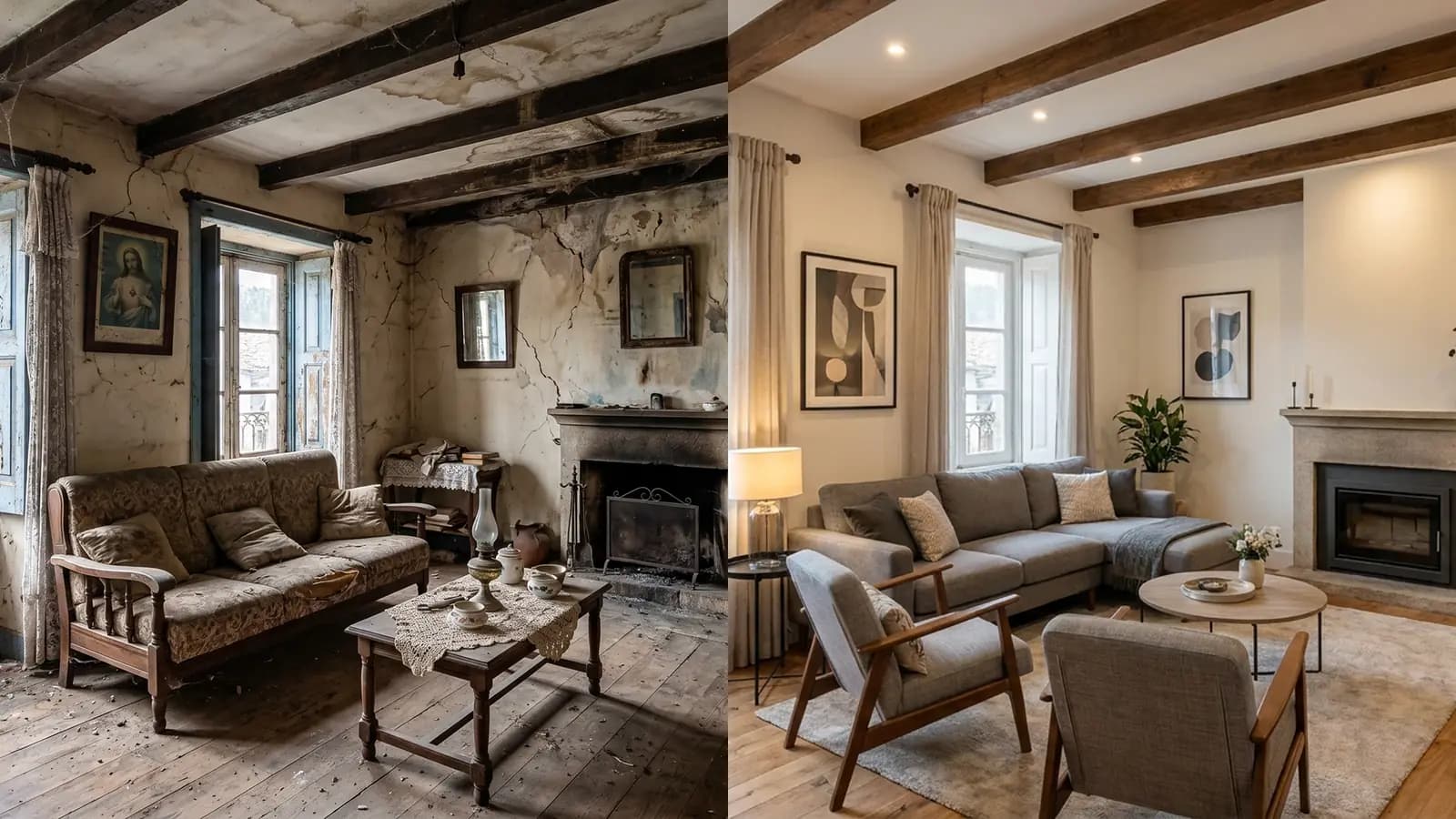
The market for AI virtual staging has matured rapidly. Two years ago, most tools in this space produced results that were clearly AI-generated — furniture that hovered above floors, lighting that did not match the room's actual conditions, scale that made sofas look like they belonged in a children's playroom. The gap between the best and worst tools was enormous, and the best were still not consistently good enough for professional listings.
In 2026, that picture has changed. The leading tools produce results that are genuinely usable for professional property listings, and the differences between them are more nuanced than they used to be. This comparison looks at the four tools that agents, photographers, and agencies ask about most frequently: Stageless AI, Collov, Pedra, and Apply Design.
The comparison is structured around the questions that matter in practice: How does the image quality actually look? What does it cost per listing? How does it fit into a real workflow? What happens with difficult rooms? And who is each tool actually built for?
The four tools: a brief orientation
Stageless AI is a European-built platform focused on professional real estate photography, offering virtual staging, AI decluttering, auto image enhancement, and virtual renovation. It processes images in under 30 seconds and delivers 4K output. Pricing is usage-based at €0.60 per photo with no subscription required. The platform offers five staging styles: Modern, Minimalist, Scandinavian, Industrial, and Luxury.
Collov is a US-based platform with a broader interior design focus beyond staging — it includes room redesign tools, colour palette generation, and AI-assisted interior design consultation. Its staging output targets both the real estate market and homeowners considering redecoration. Pricing is subscription-based with tiered plans, typically ranging from around $29 to $99 per month.
Pedra is a Spanish platform focused specifically on the real estate market, with a particular strength in the renovation visualisation use case. It has a strong presence in Spain and Latin America. Pricing is subscription-based, typically around €29 to €49 per month.
Apply Design is a UK-based platform with a focus on high-volume professional workflows, offering API access for agencies that want to integrate staging into their own platforms or CRM systems. It is the most technically oriented of the four tools and has the strongest adoption among large estate agencies and property developers.
Image quality: what the results actually look like
Image quality in AI virtual staging breaks down into several components: furniture realism, lighting accuracy, scale correctness, and structural preservation. Each tool has different strengths across these components.
Stageless AI produces the most consistently accurate lighting of the four tools. The AI correctly infers the direction and intensity of natural light from the room's shadows and highlights, and generates furniture with shadows and reflections consistent with that light source. The result in standard rooms is staging that is difficult to distinguish from professional interior photography at typical portal viewing sizes. In very dark rooms or rooms with multiple competing light sources, the quality drops — not catastrophically, but noticeably compared to well-lit rooms.
Collov produces staging that is visually attractive but occasionally inconsistent in its lighting accuracy. On well-lit standard rooms, the output is excellent and the range of furniture styles available within each broad aesthetic category is wider than Stageless AI's. The platform allows more granular customisation of individual furniture pieces. The trade-off is that more customisation options mean more decisions, which slows down high-volume workflows.
Pedra's staging quality is strong for its primary use case — renovation visualisation — and adequate for straightforward empty-room staging. Where it distinguishes itself is in scenarios where both empty-room staging and a renovation preview are needed simultaneously. For standard staging of already-renovated or new-build properties, it is competitive with Collov and Stageless AI but does not clearly lead on any specific quality dimension.
Apply Design produces high-quality staging results, particularly in its higher-tier plans where more compute is allocated to image generation. Its output quality for premium listings is strong. Where it is less competitive is on standard residential volumes, where the per-image quality does not consistently outperform Stageless AI or Collov but the pricing model assumes higher spend.
Pricing: what you actually pay per listing
The pricing comparison requires some unpacking because the tools use fundamentally different models.
Stageless AI charges €0.60 per image with no subscription. A five-room listing costs €3. A photographer or agency doing fifty listings per month pays €150 in staging costs, with no commitment. The usage-based model is predictable and scales directly with activity.
Collov's subscription plans start at approximately $29 per month for limited credits and scale to $99 per month for higher volumes. There is no pay-as-you-go option.
Pedra charges approximately €29 to €49 per month for its standard plans, with limits on the number of images processed per month. For seasonal businesses or those with irregular volumes, the subscription cost during quiet months represents a fixed overhead that usage-based pricing avoids.
Apply Design does not publish standard pricing publicly for its enterprise tiers. For smaller operations, the pricing model is not designed for their needs.
For the majority of individual agents, photographers, and small agencies, Stageless AI's pricing model is the most favourable: the lowest effective per-image cost with no minimum commitment and no subscription overhead during quiet months.
Workflow: how each tool fits into daily practice
Stageless AI is optimised for speed. Upload, select style, download — the process takes under 30 seconds per image from upload to delivery. The platform processes multiple images in parallel, so a ten-image batch can be staged in under five minutes total.
Collov takes longer per image due to the broader customisation options. For users who want to customise the staging extensively, this is a feature rather than a bug. For users who want high-volume throughput with consistent results, the customisation adds friction.
Pedra has a clean workflow for its renovation visualisation use case and reasonably fast processing for standard staging. Its interface is more complex than Stageless AI's because it offers more options for modifying architectural elements.
Apply Design has the most complex workflow of the four, reflecting its enterprise orientation. For agencies that integrate it into their CRM or property management systems via API, the workflow becomes seamless. For individual users accessing the interface directly, the enterprise-oriented design adds steps that simpler tools avoid.
Difficult rooms: how each tool handles challenging inputs
The gap between tools becomes most visible on photographs that deviate from ideal conditions. Three scenarios reveal the quality differences most clearly.
Rooms with multiple light sources: when a room has both natural window light and warm artificial light, the AI must decide which light source to use as the reference for generated furniture's shadows. Stageless AI handles this scenario well for most common configurations. Collov handles it similarly. Pedra and Apply Design show more visible artefacts in this scenario.
Rooms with unusual geometry: loft spaces with sloping ceilings, conservatories with floor-to-ceiling glass, L-shaped rooms challenge all four tools. Stageless AI performs best here due to its specific focus on real estate photography and the variety of property types in its training data.
Low-quality input photographs: all four tools are limited by the quality of the input. Among the four, Stageless AI's Auto Image Enhancement tool — which corrects the input photograph before staging — gives it an advantage on moderately problematic inputs.
Who each tool is built for
Stageless AI is built for real estate professionals — agents, photographers, and agencies — who need fast, consistent, high-quality staging at scale and want to control their costs precisely. It is the best choice for high-volume workflows, for photographers offering staging as an add-on service, and for markets where cost efficiency matters.
Collov is built for users who want significant creative control over staging output. It is less suited to high-volume, time-sensitive workflows.
Pedra is built for the Spanish and Latin American real estate markets, with particular strength in the renovation visualisation use case. For agents in these markets dealing with properties that need renovation previews, it is the strongest purpose-specific tool.
Apply Design is built for large agencies and property developers who want to integrate staging into their technology stack at scale. For individual agents or small agencies, the tool is over-engineered for their needs.
The bottom line
For most individual agents, photographers, and small-to-medium agencies, Stageless AI represents the best combination of image quality, processing speed, pricing transparency, and workflow simplicity. Its €0.60 per-image pricing with no subscription makes it the lowest-risk option to try, and the sub-30-second processing time makes it viable for the time-sensitive workflows that real estate demands.
Collov is the better choice if creative control over staging aesthetics is your primary concern. Pedra is the better choice if renovation visualisation is a core part of your service offering in the Spanish or Latin American market. Apply Design is the better choice if you are a large agency or developer with the technical resources to integrate it into your existing systems.
None of the four tools consistently underdelivers for its intended use case. The mistake is choosing a tool designed for a different type of user.
Try Stageless AI for free — 20 free credits, no credit card, no subscription. stageless.ai/en/auth/register
Written by Stageless Team
We are a team of real estate technology experts passionate about AI. Our mission is to help agents sell faster by democratizing access to high-end virtual staging tools.