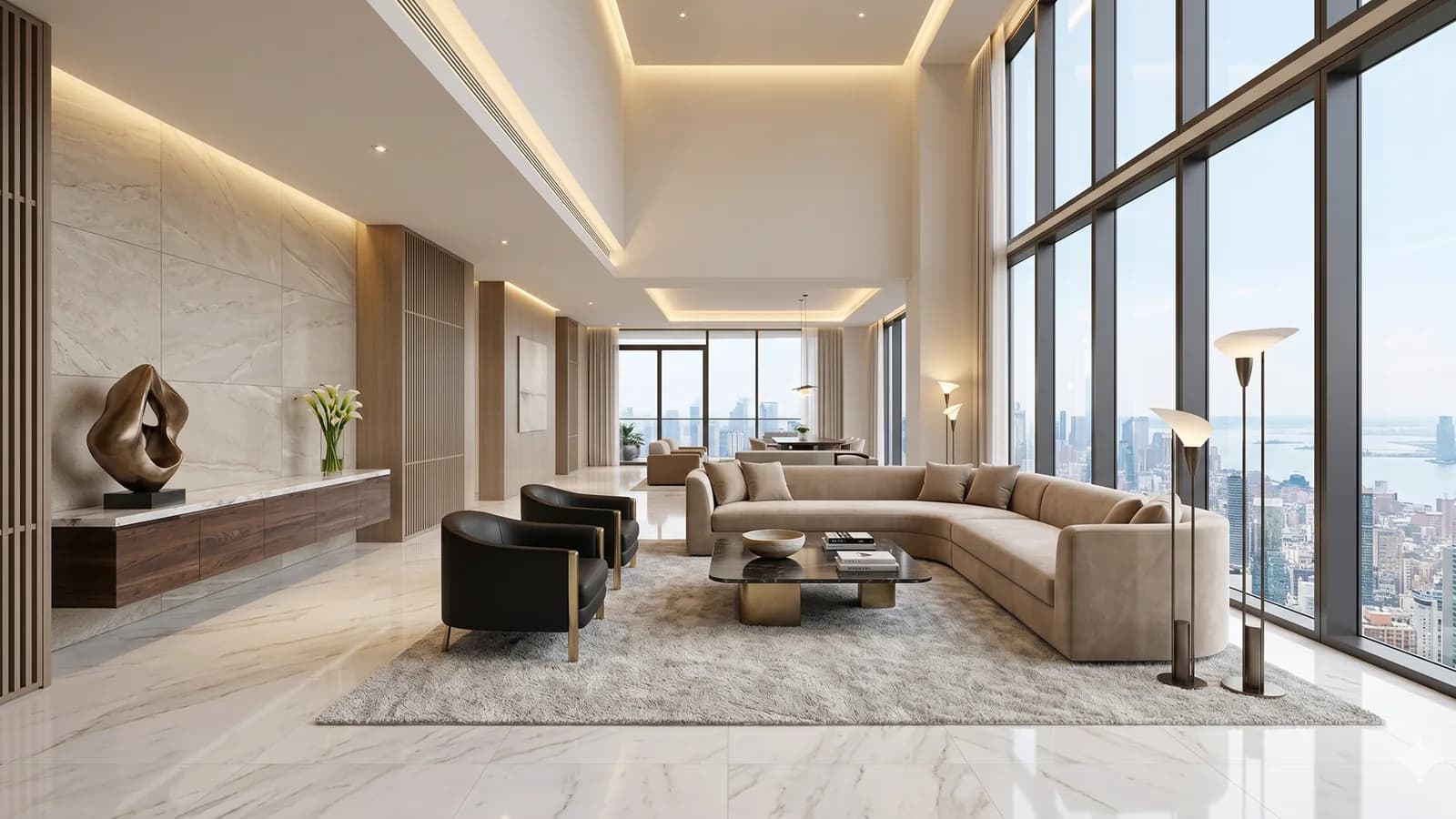
Virtual Staging Before and After: Real Examples That Show What AI Can Do

Stageless Team
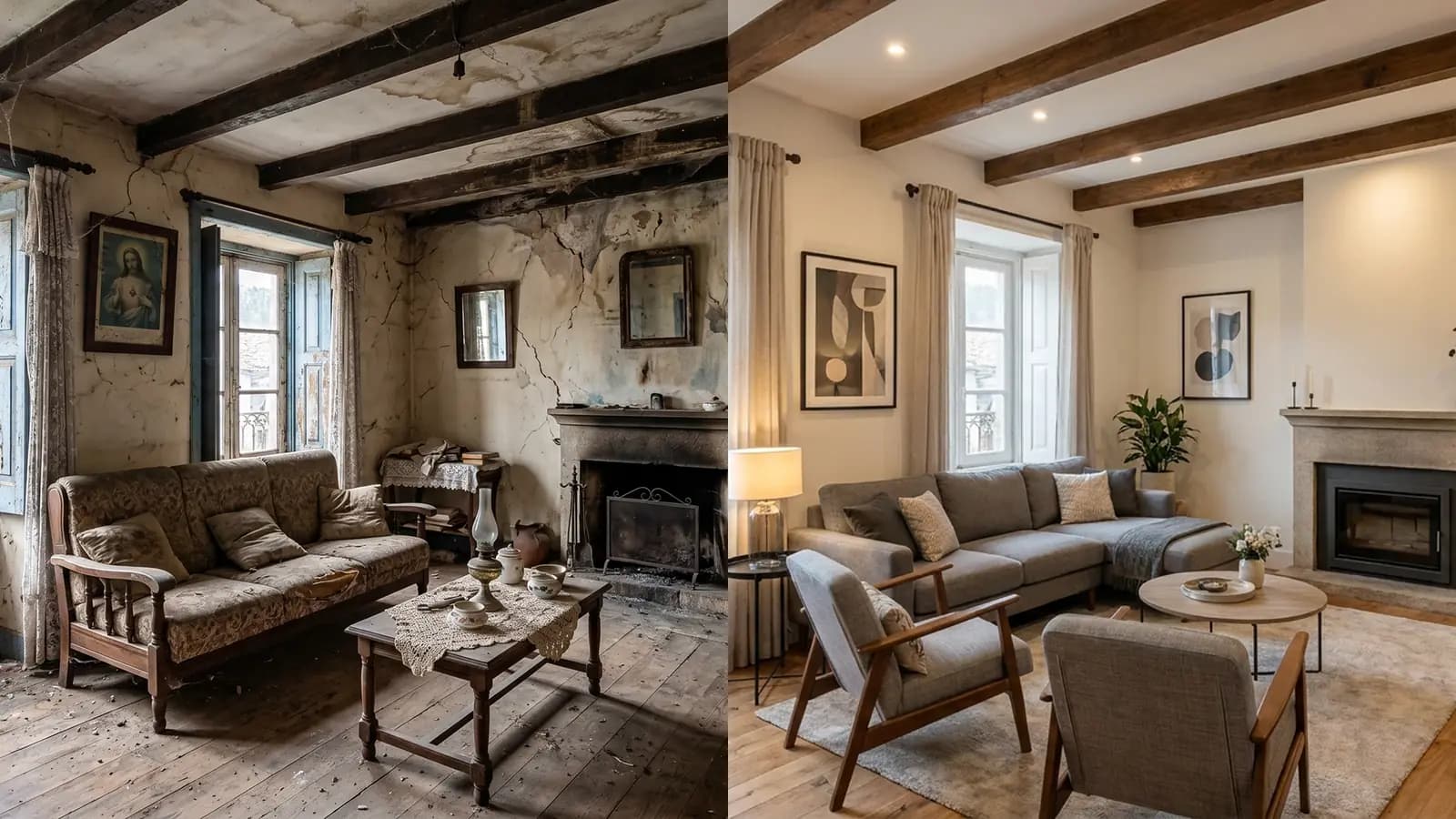
Virtual staging is one of those technologies that is far easier to understand through pictures than through words. You can read about photorealistic AI rendering, about furniture scale algorithms and depth-aware lighting models, and the description will still feel abstract. Then you see a before and after — an empty concrete shell on the left, a fully furnished Scandinavian living room on the right — and the value proposition lands immediately.
This article shows you exactly that: real transformations across different room types, property styles, and interior aesthetics. Each example includes an explanation of what the AI is actually doing, what to look for, and what separates a convincing result from a poor one.
What AI virtual staging actually does to a photograph
When you upload a photograph to Stageless AI, the model does not simply paste furniture images onto the picture. It analyses the photograph in three dimensions: inferring the room's geometry from perspective lines, estimating the position and intensity of light sources from shadows and highlights on the walls, and calculating the floor plane on which furniture will sit. It then generates furniture that is sized, lit, shadowed, and colour-balanced to match the physical reality of the room it is placing it into.
The result is that the furniture does not look added. It looks as though it was there when the photograph was taken.
This is the standard against which every virtual staging tool should be judged: not whether it adds furniture, but whether the furniture looks as though it was always there.
Example 1: Empty living room → Modern style
The room is a vacant open-plan living room in a new-build apartment. White walls, engineered oak flooring, two large windows facing south-west. No furniture, no rugs, no artwork.
Empty new-builds are among the hardest listings to photograph compellingly. The white walls and absence of any reference objects make it genuinely difficult for buyers to gauge the room's size. Without furniture to break up the space, photographs tend to look flat and institutional.
The AI generates a Modern-style furnishing — a low-profile sofa in warm grey, a glass and steel coffee table, a sculptural floor lamp, and a large-format abstract canvas on the wall behind the sofa. The floor lamp casts a warm secondary light source that plays realistically against the cooler natural light from the windows. Shadows under the sofa legs follow the angle of the window light.
The detail to look for is the sofa legs. In poor-quality virtual staging, furniture often appears to hover slightly above the floor because the AI has not accurately grounded it on the floor plane. Each leg sitting flush with the floor surface, with a small accurate shadow beneath it, is one of the clearest indicators of a quality result.
According to the National Association of Realtors, 82% of buyers' agents say staging makes it easier for buyers to visualise a property as their future home. An empty white room gives them nothing to work with. A furnished one gives them a starting point.
Example 2: Cluttered bedroom → Minimalist style
A master bedroom in an occupied property. The owners have moved most of their furniture but left behind an old wardrobe, a mismatched bedside table, and several boxes stacked against the wall.
Cluttered rooms are arguably more damaging than empty ones. Buyers can mentally populate a blank canvas; they struggle to see past someone else's possessions. The mix of old furniture and moving boxes actively distracts from the room's proportions.
This example uses two Stageless AI tools in sequence. First, the AI Declutter tool removes the existing furniture and boxes entirely, producing a clean empty room. Then the virtual staging tool furnishes it in Minimalist style: a queen-sized bed with a low upholstered headboard in off-white linen, matching oak bedside tables, a geometric pendant light centred above the bed, and a neutral wool rug that defines the sleeping zone. The palette is intentionally restrained — whites, creams, and light oak — to make the room feel larger and lighter.
The detail to look for here is the rug. Placing a rug convincingly requires the AI to understand not just the floor plane but the perspective foreshortening that occurs with flat objects viewed at an angle. A poorly foreshortened rug is immediately conspicuous. A correctly foreshortened one recedes naturally into the distance of the room.
Research from Rightmove consistently shows that bedrooms staged in clean, neutral styles receive higher engagement rates than those staged in bold or maximalist aesthetics. Buyers need to be able to project themselves into the space, and a heavily styled room makes that harder.
Example 3: Dark kitchen-diner → Auto-enhancement + Scandinavian staging
A kitchen-diner in a Victorian terraced house. The kitchen itself is in good condition — solid wood cabinets, stone worktops — but the photography was taken in poor light, with a single overhead pendant producing harsh shadows. The dining area is completely empty.
Lighting is the most common photography problem in occupied properties. Estate agents often photograph properties quickly, without professional lighting equipment, producing images that undersell perfectly good rooms. The dark, contrasty photograph makes the kitchen look smaller and less appealing than it is in person.
The process here runs in two steps. First, Stageless AI's Auto Image Enhancement tool corrects the photograph — balancing the exposure, lifting the shadows, warming the colour temperature slightly to match the natural warmth of the wood cabinets, and recovering detail in the highlights on the stone worktop. The kitchen now looks as it does in person on a bright morning. Then the empty dining area is furnished in Scandinavian style: a round oak dining table with four wishbone chairs in natural beech, a simple pendant above, and a small ceramics display on the windowsill.
The round table shape is a deliberate choice for smaller dining areas. It takes up less visual space than a rectangular table, which matters when the kitchen is already the dominant feature of the room.
The colour temperature consistency between the enhanced kitchen and the generated dining furniture is what to examine closely. When two AI processes are applied to different parts of the same photograph, there is a risk of a visible seam where the two zones meet. The warm wood tones of the generated furniture matching the enhanced kitchen cabinets naturally is a sign that the enhancement and the staging are working from the same tonal reference.
Example 4: Empty outdoor terrace → Luxury style
A roof terrace on a penthouse apartment. Approximately 40 square metres, concrete floor, aluminium balustrade, views across the city.
Outdoor spaces are consistently underused in property marketing. Agents often photograph a terrace as a wide, empty expanse of concrete, which does little to help buyers appreciate the lifestyle potential of the space. Staging an outdoor space physically — with patio furniture, planters, outdoor rugs — is logistically complex and expensive.
The AI generates a Luxury-style outdoor living configuration: a large L-shaped outdoor sofa in weathered grey rattan, a teak side table, a fire pit table at the centre, and several large terracotta planters with architectural plants. The staging transforms the photograph from a documentation of a concrete terrace into a vision of how the space could be used.
The plants are the detail worth examining. Organic, irregular forms are among the hardest things for generative AI to render convincingly, because plants have no regular geometry for the model to extrapolate from. Leaf detail and branch structure rendered at a quality that reads as photographic at normal viewing distances is a meaningful indicator of model sophistication.
A 2023 study by the American Society of Home Stagers and Redesigners found that staged outdoor spaces add a perceived value premium of 8 to 12% to a listing price. The cost of virtually staging a terrace with Stageless AI is €0.60.
Example 5: Industrial loft → Industrial style
A raw conversion loft apartment, previously a factory floor. Exposed brick walls, original steel I-beams, polished concrete floor, large steel-framed windows. No partition walls, no furniture.
Raw conversion properties are among the most photographed property types in urban markets and among the most difficult to present. The exposed structure is the selling point, but an entirely empty shell gives no indication of how a liveable home would actually work in the space. Buyers with limited imagination see a building site rather than an apartment.
The AI generates an Industrial-style living and dining configuration. A deep charcoal velvet sectional sofa anchors the sitting area, with a reclaimed-wood and iron coffee table. A large factory-style pendant cluster hangs from one of the I-beams. The dining area features a long refectory table in weathered timber with metal hairpin legs, and metal chairs. A large-format black-and-white architectural photograph leans against the brick wall.
What separates this result from a simpler example is how the AI positions the furniture relative to the existing architecture. The furniture respects and frames the structural columns rather than obscuring them. The pendant light hangs from the I-beam at a realistic height. These spatial relationships — furniture responding intelligently to architecture — are what distinguish AI staging that looks designed from AI staging that looks dropped in.
The five things that separate good virtual staging from bad
Across all five examples, the same quality indicators appear. When evaluating any AI virtual staging tool, these are the things to examine.
Grounding. Furniture must sit on the floor, not hover above it. Check the legs of sofas and chairs. Each should have a small shadow beneath it that follows the direction of the room's light source.
Shadow consistency. Every piece of furniture casts a shadow. The direction of all shadows must be consistent with a single primary light source — typically the window. Contradictory shadows are immediately visible to the human eye, even if the viewer cannot explain why the image looks wrong.
Scale accuracy. A sofa that is proportionally too large makes a room look smaller than it is. A coffee table that is too small looks like a child's toy. The AI must accurately infer room dimensions from the photograph to place furniture at the correct scale.
Colour temperature matching. Generated furniture must match the warmth or coolness of the room's existing light. A warm-toned room with cool-toned generated furniture produces a disconnect that reads as artificial.
Perspective coherence. Flat objects — rugs, tables viewed from above — must recede into the distance at the correct angle. Incorrect foreshortening is one of the most common indicators of low-quality virtual staging.
How to get the best results
The quality of the output depends significantly on the quality of the input. A few practical notes for agents and photographers.
Use landscape orientation. Wide shots give the AI more room geometry to work with, producing better spatial understanding and more accurate furniture placement.
Photograph from corner to corner where possible. A shot that captures two walls and the floor plane simultaneously gives the AI the clearest signal about the room's dimensions.
Avoid extreme backlighting. Photographs where a bright window dominates the frame compress the tonal range of the room's interior, making it harder for both the enhancement tools and the staging model to work accurately.
Choose the style that matches the property. Stageless AI offers five interior aesthetics — Modern, Minimalist, Industrial, Scandinavian, and Luxury. Matching the staging style to the property's architecture and its likely buyer demographic consistently produces better results and higher engagement on listing portals.
Get 20 free credits with no credit card required at stageless.ai/en/auth/register
Written by Stageless Team
We are a team of real estate technology experts passionate about AI. Our mission is to help agents sell faster by democratizing access to high-end virtual staging tools.