How to Sell a Property That Needs Renovation

Stageless Team
Editor in Chief
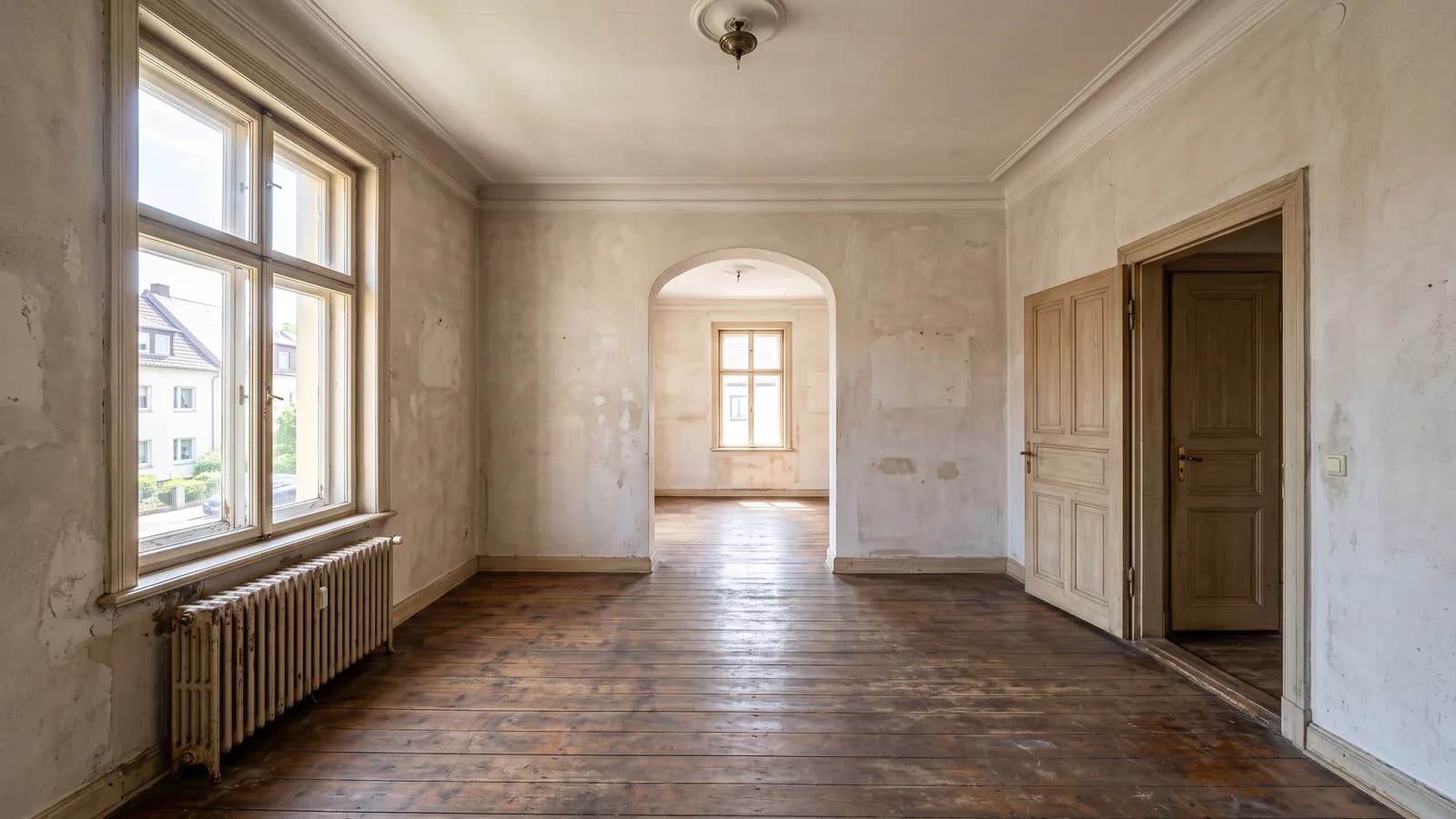
Over half the housing stock in Spain is more than 40 years old. In Portugal, existing homes rose 19.7% year on year in the first quarter of 2026 against 12.6% for new build, while transactions fell 8.7%. The listing that needs work is not the exception in most portfolios any more.
The instinct with these properties is to treat presentation as the whole problem. It is part of it. The larger part is that a buyer looking at a property needing work is doing arithmetic, and every question your listing leaves unanswered is a number they have to guess at. People guess pessimistically, and then they walk.
Seven tactics that move this kind of property. Two of them have nothing to do with photography at all, and they are the two that make the most difference.
Why This Listing Behaves Differently
The buyer pool is narrower
A finished property is available to almost anyone who can afford it. A property needing work is available to people who can afford it, plus the work, plus the disruption, plus the risk that the work costs more than expected.
Each of those filters removes buyers. The pool that remains is smaller and more calculating, which means the marketing job changes: you are not persuading a larger audience, you are giving a smaller one the information it needs to commit.
The bargain premise no longer holds
Renovation costs in Spain have risen somewhere between 30% and 40% in recent years. A property "for reform" used to carry an obvious discount that made the maths work in the buyer's head without any help.
That is no longer automatic. The buyer is not looking at a cheap way in, they are looking at an uncertain total. Uncertainty is what you are selling against, and it is not fixed by lowering the price. It is fixed by narrowing the range of possible outcomes.
1. Price Against Finished Value Minus Work Minus Risk
The common error is to price against neighbouring sales and then discount by gut feel.
The arithmetic a serious buyer actually runs: what is this worth finished, what will the work cost, what margin do I need for the things nobody found yet. If your asking price does not leave room for all three, the property does not sell, and the reason will never appear in your feedback because buyers do not explain arithmetic, they simply stop replying.
So run the same calculation before you set the price. Establish the finished value from comparable renovated properties rather than from comparable unrenovated ones. Subtract a real cost estimate. Subtract a contingency, because the buyer will.
If the resulting number is below what the seller will accept, you have a pricing conversation to have now, not in eleven weeks after two rounds of reductions have told the market the property has a problem.
2. Get Two Contractor Quotes Before You List
This is the first tactic that has nothing to do with photography, and it is the highest-return thing in this article.
Ask two contractors you already work with to quote the main intervention. Kitchen and bathroom usually, since in a 2026 Spanish study by Recomiend.app and Reeno, based on 384 responses, bathrooms accounted for 40.8% of renovation demand and kitchens for 31.2%.
You are not doing this to be helpful. You are doing it to replace the buyer's worst-case guess with a range from someone who has seen the property.
Present it as a range and as indicative, never as a quotation the buyer can rely on. "Two local contractors have estimated the kitchen and bathroom at between X and Y. Full quotations available on request." That sentence does more work than any photograph in the listing, because it converts the largest unknown into a bounded number.
It is also reusable. Quotes for a T2 in a given area and condition apply approximately to the next T2 in the same area and condition. Refresh them twice a year.
3. Commission the Survey Yourself
The second tactic with no photography in it.
On a property with visible defects, a buyer will commission a survey before committing. That survey happens after they have made an offer, which means the process runs: offer, survey, renegotiation or withdrawal. The renegotiation is always downward and the withdrawal costs you six weeks.
Commissioning the survey before listing inverts this. You know what is wrong, you price accordingly, and you disclose it. Buyers who cannot handle the findings self-select out before you waste a viewing on them. Buyers who can, offer with confidence, because the surprise has been removed from the transaction.
The objection is that publishing problems drives buyers away. In practice it drives away the buyers who were going to withdraw anyway, later, after costing you time. The ones who remain are the ones who were always going to buy.
One caveat: confirm what disclosure obligations apply in your market and whether sharing a survey creates liability for the accuracy of its contents. This is a conversation for whoever handles your compliance, not a decision to make from an article.
4. Fix the Three Cheap Things, Leave the Expensive Ones
There is a category of defect that costs almost nothing to resolve and does disproportionate damage to how a property is perceived.
A dripping tap. A cracked pane. A door that does not close. A dead bulb in a room you photograph. A smell. None of these are the reason a property needs renovation, and all of them tell a buyer that nobody has been looking after the place, which makes them assume the same about everything they cannot see.
Fix those. Leave the kitchen, the bathroom and the flooring exactly as they are, because a partial renovation on a property that needs a full one is the worst of both outcomes: you spend real money and the buyer still has to redo it, so you get no credit for the spend.
The rule: fix what signals neglect, leave what signals scope.
5. Show the Property as It Is, and What It Could Be, Side by Side
Now the photography.
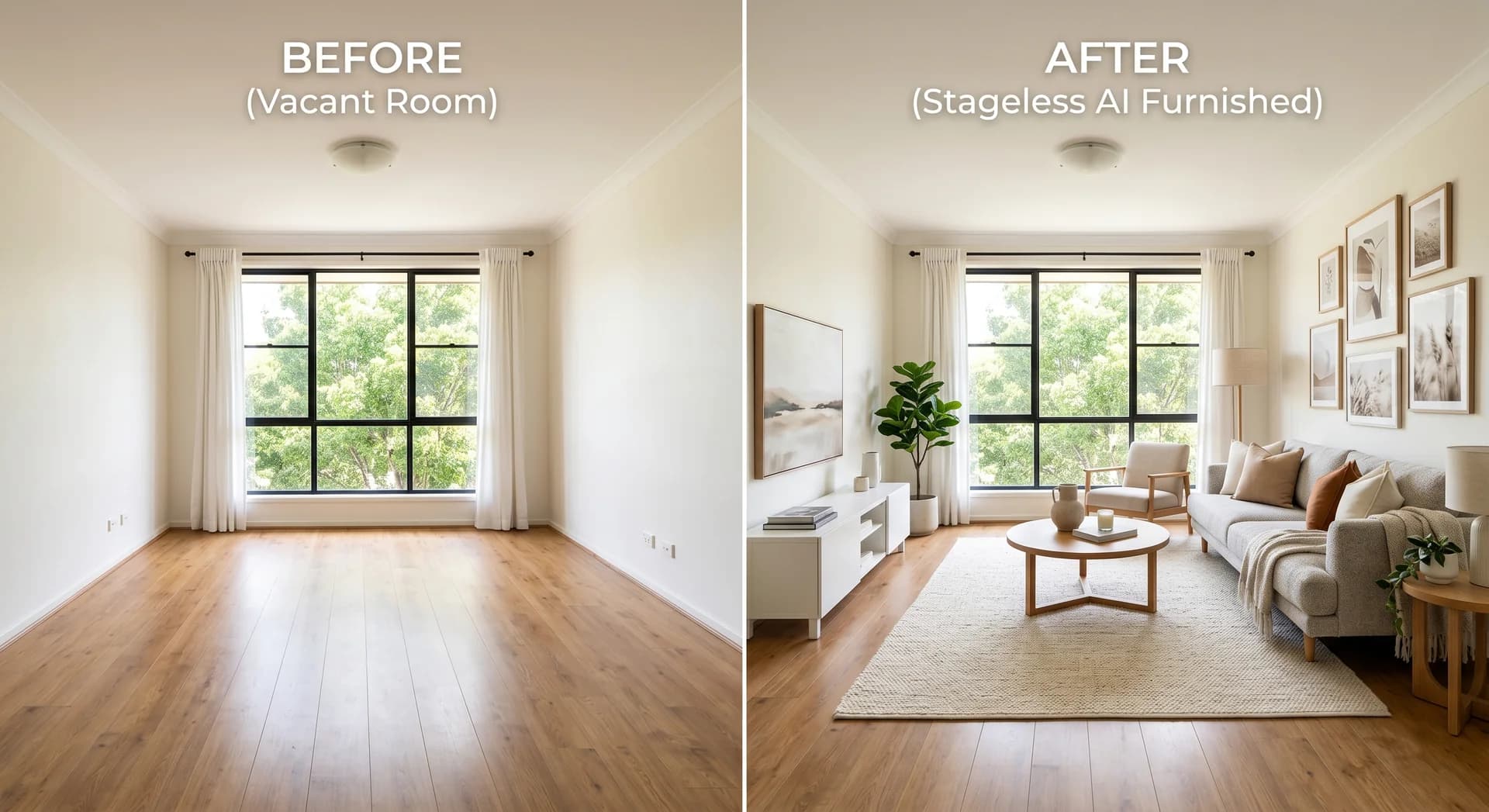
Photograph the property honestly, in good light, with the rooms clear. Then produce a renovated version of the kitchen, bathroom and living room, and publish each pair together in the same crop: original on the left, renovated on the right, with the cost range from tactic 2 underneath.
The pair is the format that works. A renovated image published alone leaves the buyer unable to tell which version they will walk into, and that doubt is worse than the dated kitchen was. An honest photo published alone leaves them without a reason to imagine anything.
Two things you never edit out: cracks, damp, exposed wiring and structural damage, and anything outside the property the buyer cannot change, such as a pylon or a blocked view. The test is whether the buyer can alter it after purchase.
Disclose the edit. Article 50 of the EU AI Act has applied since 2 August 2026 and the duty sits with whoever publishes the listing. For a renovation projection, state that the image is a concept and that the property is sold in its current condition.
6. Write the Description for Someone Doing Arithmetic
Most descriptions for these properties are written to avoid the subject. "Property with great potential, requires some updating, in a sought-after area." A buyer reads that as an attempt to be vague about something.
Write it for the calculation instead. State plainly what needs doing, room by room. State what was recently done, if anything, with the year: a roof replaced in 2021 is a material fact and it is worth more in the description than three adjectives. State the cost range. State that quotations and a survey are available.
Include the energy rating and say what it is, rather than hoping it goes unnoticed. On an older property it is usually poor. A poor rating is a negotiation lever a buyer will use, and the way to blunt it is to be the one who raised it and to know what improving it would involve. Verify what renovation support schemes currently apply in your market before referencing any, because these change and an outdated reference costs credibility.
The tone that works is factual, not apologetic and not promotional. You are selling to someone who wants information, and the surest way to lose them is to appear to be managing what they find out.
7. Match the Listing to the Right Buyer, and Stop Chasing the Wrong One
The owner-occupier who will live through the work
Usually a first or second-time buyer priced out of finished stock in the same area. Motivated by getting into a location they otherwise could not reach.
What they need: the renovated visualisation, the cost range, and reassurance about sequence and disruption. They are buying an outcome and they are frightened of the process. The renovation imagery matters most to this buyer.
The investor
Buying for resale or rental yield. Wants the finished value, the cost, the timeline and the numbers, and will not be moved by a beautifully staged kitchen.
What they need: the survey, the quotes, and comparable renovated sales. Send the documents, not the visuals. This buyer often closes fastest because there is no emotion in the decision.
The buyer who wants it turnkey
Not your buyer. They will view, they will be disappointed, and they will leave feedback that makes the seller anxious.
The useful move is to filter them out earlier, and honest presentation does exactly that. A description that plainly states the property needs a new kitchen and bathroom saves you the viewing and saves them the trip. Vagueness generates viewings that cannot convert and then feeds the seller a stream of negative feedback about a property that is priced correctly for a different audience.
What Not to Do
Do not lead with a price reduction. On a property needing work, a reduction reads as confirmation that something is wrong rather than as an opportunity. Fix the information gap first and see whether the price was actually the problem.
Do not photograph around the defects. A gallery with no photograph of the kitchen tells the buyer the kitchen is the problem, and now they are imagining something worse than what is there.
Do not renovate virtually and stay silent about it. A buyer who arrives at a viewing having believed the kitchen was new spends the next twenty minutes discussing trust rather than the property.
Do not use the words "potential" or "opportunity" without saying what they refer to. Both are read as filler on this kind of listing.
A Note on the Numbers You Will See Elsewhere
Articles on this subject routinely quote figures on how much faster staged or visualised properties sell. Those figures come almost entirely from two American sources, the National Association of Realtors and the Real Estate Staging Association, and the most-quoted claims do not come with published sampling methodology.
No European study with a published sample exists on the effect of renovation imagery on time to sell or on final price for properties needing work. Anyone quoting a European percentage is extrapolating.
The market data in this article is sourced and current. The performance percentages are not, so they are not here.
Getting Started
If you have one of these properties sitting in your portfolio, the order to work in is: get two quotes, then reprice if the arithmetic requires it, then fix the cheap signals of neglect, then produce the before and after pairs, then rewrite the description around the numbers.
The photography step is fifth for a reason. It is the fastest to do and the least likely to be what is holding the property back.
Stageless AI handles the visual part from 0.60 euros per image, in a browser, with three free credits on signup and no credit card required. Try it free at stageless.ai.
Written by Stageless Team
We are a team of real estate technology experts passionate about AI. Our mission is to help agents sell faster by democratizing access to high-end virtual staging tools.